"The Schizophrenic World" - A Small Town Sermon and a New York Lecture
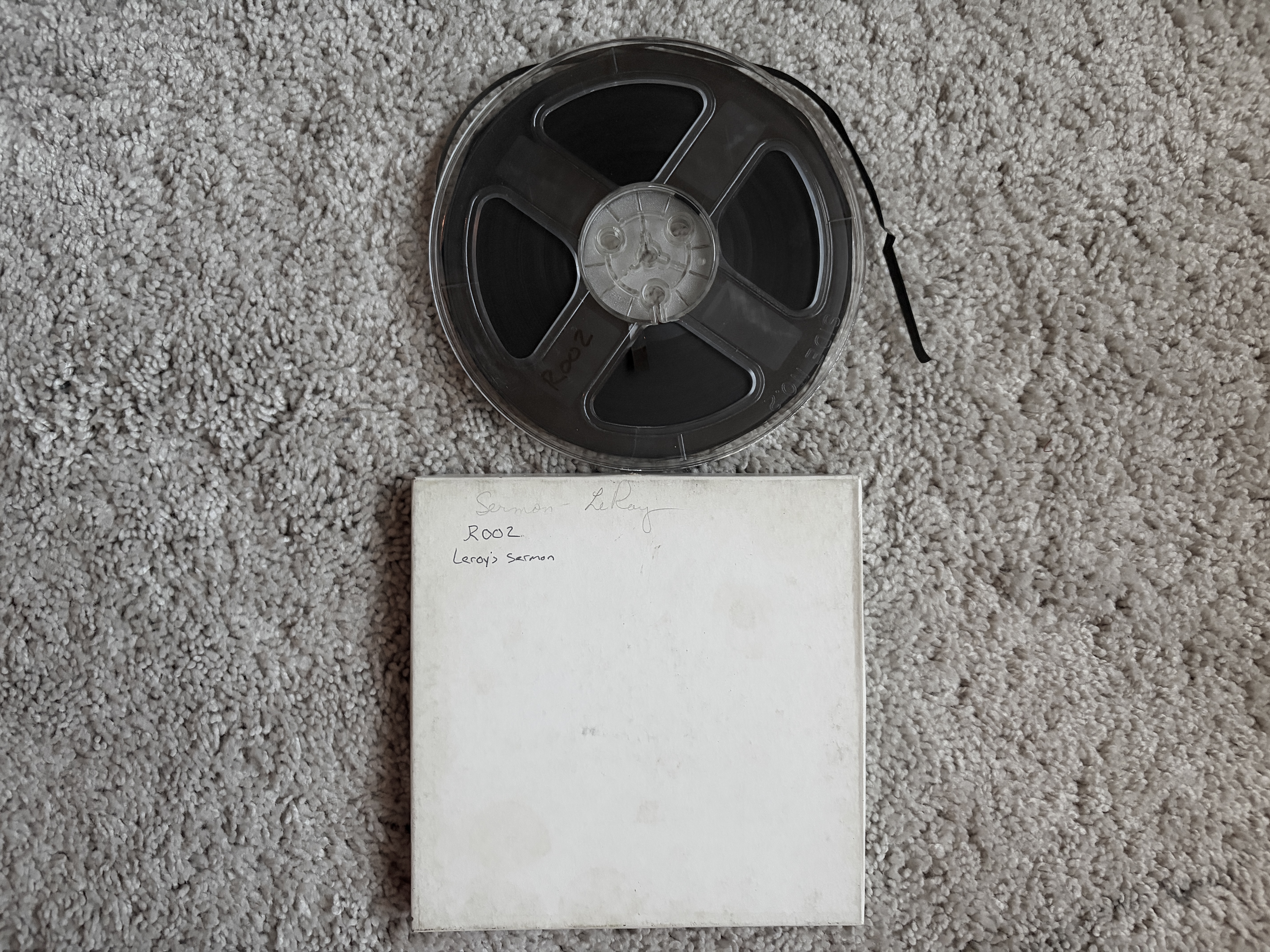
- Tracklist2 tracks · 121:19
- RA-002 · 2 tracksDownload track
Description
Track 1 — Congregational Worship and Sermon
A complete Sunday morning service at a small Evangelical United Brethren church in rural Wisconsin, likely near Elroy, recorded c. 1961–1962. The service opens with the hymn "I Stand on the Valley of Sunshine at Last," followed by the Lord's Prayer, a responsive reading from Philippians 2, and congregational hymns. A soloist named Linda sings "He's a Quiet, Wonderful Savior." Between hymns, announcements are read: a youth fellowship trip to Elroy that afternoon, a WSWS convention at Lake Lucerne, choir practice Thursday, and an ice cream social on the church lawn Friday evening from 5 to 9.
The sermon, delivered by a young pastor, is drawn from Matthew 6:1-20 and the Beatitudes — "Blessed are the pure in heart, for they shall see God." He tells a first-person story about working at a juvenile reform school near Chicago one summer, where the boys had stopped using God's name entirely because it meant nothing to them. He speaks bluntly about racial prejudice in white churches, American hypocrisy — sending food aid in exchange for military airstrips, printing "In God We Trust" on currency while spending 80% of tax dollars on war — and calls the national condition "schizophrenic." The recording quality suggests it was captured through the church's PA system.
Track 2 — Dr. Emanuel Schwartz at the Cooper Union Forum
A public lecture by Dr. Emanuel K. Schwartz, a psychologist from the Cooper Union School in New York City, delivered Wednesday, October 4th, 1961. The talk is titled "The Schizophrenic World." Schwartz argues that modern society — its broken promises, contradictory demands, and increasing isolation — actively produces schizophrenia. He outlines four theories of its cause, citing a survey that found only 16 of over 1,100 recognized American composers earned a living from their work. He quotes Toynbee on drowning in information and Mumford on the expanding metropolis.
The lecture shifts into clinical territory with striking case studies: a patient under hypnosis who manifested four alternate personalities — a Southern colonel, a Black man, an Englishman, and finally a rooster that crowed instead of speaking — and a story about seeing a colleague's face in a bowl of soup and nearly concluding it was telepathy. He closes with a discussion of Freud's development of psychoanalysis from hypnosis, demonstrating how the unconscious operates through post-hypnotic suggestion.
Both recordings on this reel, made independently, diagnose the same condition — a fractured, contradictory society — one from a Wisconsin pulpit, the other from a New York lectern.